
← Back
SAR Mission Performance Cluster (MPC): How CLS Ensures Satellite Data Quality
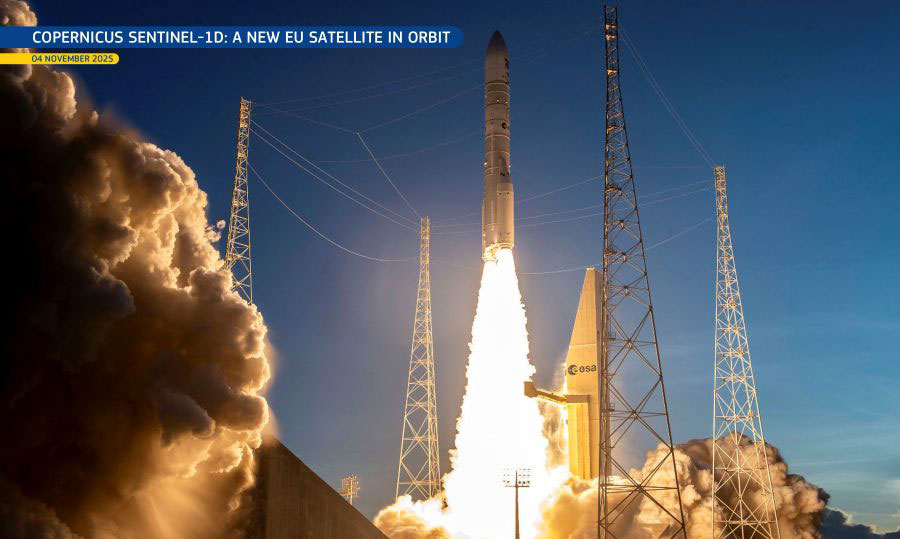
High-quality satellite data is the foundation downstream applications, including reliable maritime intelligence.
Before radar images are delivered to operational users, a critical process takes place behind the scenes to ensure that satellite instruments and ground processing chains perform at their best.
At CLS, this mission is carried out by the SAR Mission Performance Cluster (MPC), operated in support of the European Space Agency (ESA) for the Sentinel-1 mission as part of the Copernicus programme. With the successful launch of Sentinel-1D, CLS continues to play a key role in guaranteeing the continuity and quality of Europe’s radar-based Earth observation capabilities.
The SAR Mission Performance Cluster (MPC): Ensuring Data Quality from Space to Ground
Coordinated from Brest, France, the CLS SAR Mission Performance Cluster (MPC) supports ESA by monitoring the performance of Sentinel-1 satellites and their associated ground processing chains throughout the entire mission lifecycle from launch and during the routine operations.
The primary objective of the MPC is clear: ensure the highest possible quality of satellite data delivered to users.
To achieve this, MPC teams:
- monitor the health and performance of satellite instruments
- oversee ground processing chains to guarantee data reliability and consistency
- perform calibration and validation activities
- detect and correct any performance degradation over time
- continuously improve data quality whenever possible
This long-term monitoring is essential to maintain trusted satellite services for maritime surveillance, environmental monitoring and emergency response.
In-Orbit Commissioning: A Critical Phase After Launch
Following launch, satellite data cannot be made immediately available to users. The satellite first enters the In-Orbit Commissioning (IOC) phase, a dedicated period for instrument tuning, calibration and performance validation.
Copernicus Sentinel-1D was successfully launched on 4 November aboard an Ariane 6 rocket from Europe’s Spaceport in Kourou, French Guiana.
During this phase:
- data acquisitions are used exclusively for calibration and performance checks
- instruments and processing chains are fine-tuned
- overall data quality is thoroughly assessed
For Sentinel-1D, the IOC phase will run until end April. Only after this date will data be released to users, ensuring that operational products fully meet Copernicus quality standards.
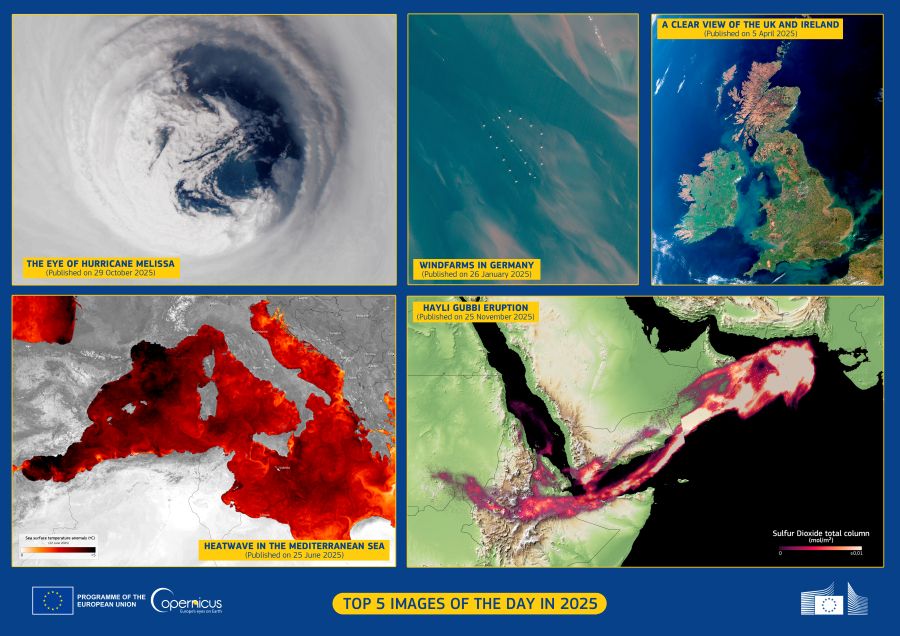
European Union, Copernicus Sentinel-2 imagery
CLS Commitment to the Sentinel-1 Mission
CLS has been supporting the Sentinel-1 mission for more than a decade. CLS has been in charge of the Sentinel-1 Mission Performance Cluster (MPC) since 2012, supporting successively:
- The setup of the service
- Sentinel-1A since 2014
- Sentinel-1B from 2016 to 2021
- Sentinel-1C since 2024
- The IOC of Sentinel-1D, since its launchin November 2025
This long-term involvement ensures continuity of expertise and robust performance monitoring across successive satellite generations.
The MPC relies on a core team of five full-time experts, supported by specialised partners depending on specific technical needs, all working towards a single objective: delivering trusted, high-quality satellite data.
Sentinel-1D: Supporting Maritime and Environmental Intelligence
Developed under the EU Space Programme in close cooperation with ESA, Sentinel-1D ensures the continuity of Europe’s radar imaging capabilities, replacing Sentinel-1A launched in 2014.
Thanks to its advanced radar technology, Sentinel-1D provides high-resolution imagery, day-and-night observation, and all-weather monitoring.
These capabilities are essential for CLS services, supporting inter alia:
- maritime surveillance
- oil spill detection
- detection of illegal maritime activities
- flood and natural hazard monitoring
- iceberg detection
- monitoring forests and agricultural land
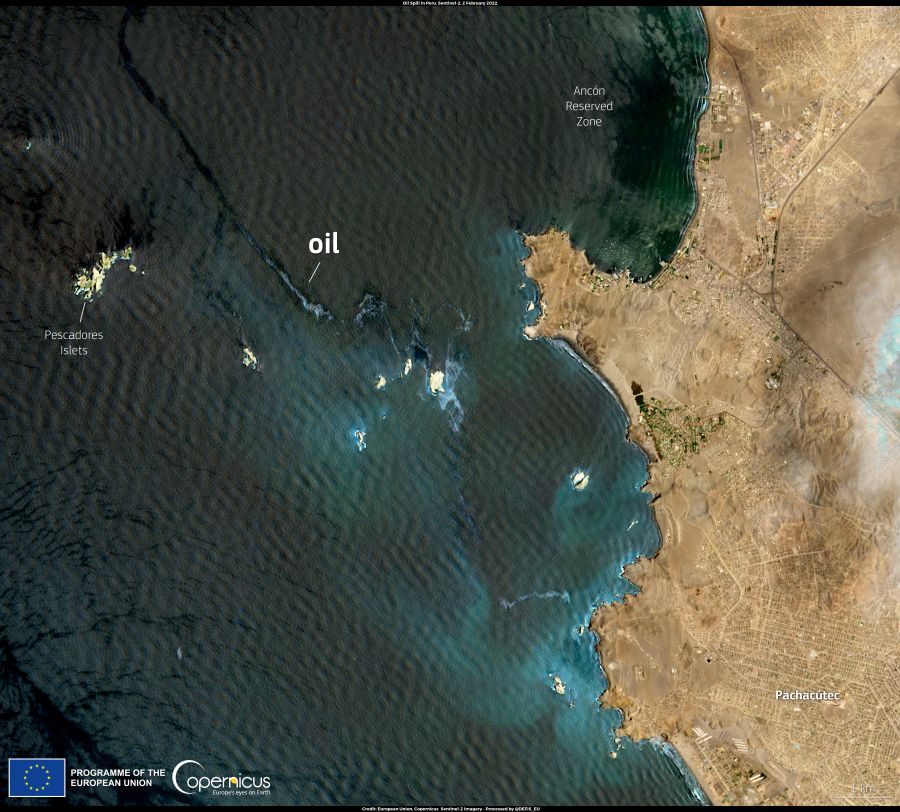
European Union, Copernicus Sentinel-2 imagery
Reliable Satellite Data for Maritime Intelligence
Once fully calibrated, Sentinel-1D will deliver data freely to public and private users, reinforcing Europe’s leadership in Earth observation and supporting operational maritime intelligence services worldwide.
By ensuring data quality at source, the SAR Mission Performance Cluster (MPC) operated by CLS plays a critical role in enabling:
- accurate maritime situational awareness
- environmental protection
- security and emergency response
- sustainable growth
Because in satellite-based maritime intelligence, data quality is not an option, it is a mission.
Related Posts:
 Sri Lanka: From an Oil Slick to the Discovery of Global Fuel Trafficking
 European Space Week, Marseille, 3-6 December 2018
 Collision Between Front Eagle and Adalynn: Satellite and AIS Analysis
 CLS is attending digital Maritime Reconnaissance and Surveillance Technology (MRST) 2021 trade fair from 3rd to 4th February