← Back
Dark Fleet Vessel Tracking: The “Grinch” Case with MAS

In early 2026, the oil tanker “Grinch” was intercepted by French authorities following suspicious voyages linked to Russian oil exports. Suspected of operating within the Russian dark fleet, the vessel displayed repeated identity changes, AIS anomalies and sanction exposure indicators.
This case highlights how advanced dark fleet vessel tracking, powered by CLS’ Maritime Awareness System (MAS), enables authorities and compliance stakeholders to detect embargo circumvention tactics and monitor high-risk maritime activity.
Why Dark Fleet Vessel Tracking Matters
Sanctioned oil trades increasingly rely on so-called “dark fleet” vessels, ships that use identity manipulation, flag switching and AIS anomalies to obscure cargo origin and ownership history.
These practices create risks for:
- Maritime authorities
- Port state control
- Insurers and P&I clubs
- Energy traders
- Compliance and due diligence teams
Effective dark fleet vessel tracking requires continuous monitoring and historical reconstruction of vessel behavior.
Vessel Profile: Identity Changes and Flag Switching
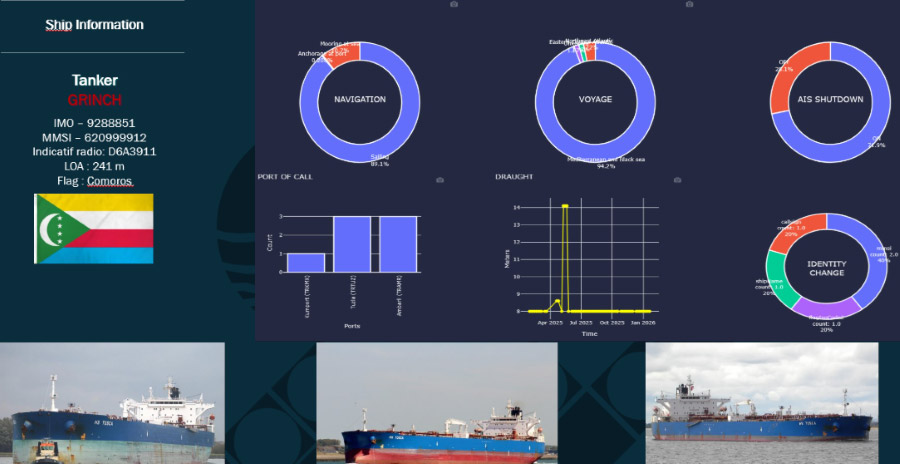
The tanker “Grinch” displayed multiple indicators consistent with dark fleet vessel tracking scenarios:
- Repeated changes of name
- MMSI modifications
- Flag state switches
- Ownership variations
- Exposure to sanctions-related programs
AIS Anomalies and Spoofing Indicators
AIS manipulation remains one of the most frequent tactics used by high-risk vessels. In the “Grinch” case, MAS analytics highlighted:- Irregular AIS transmission patterns
- Identity inconsistencies
- Suspicious navigation behavior
- Activity in high-risk zones
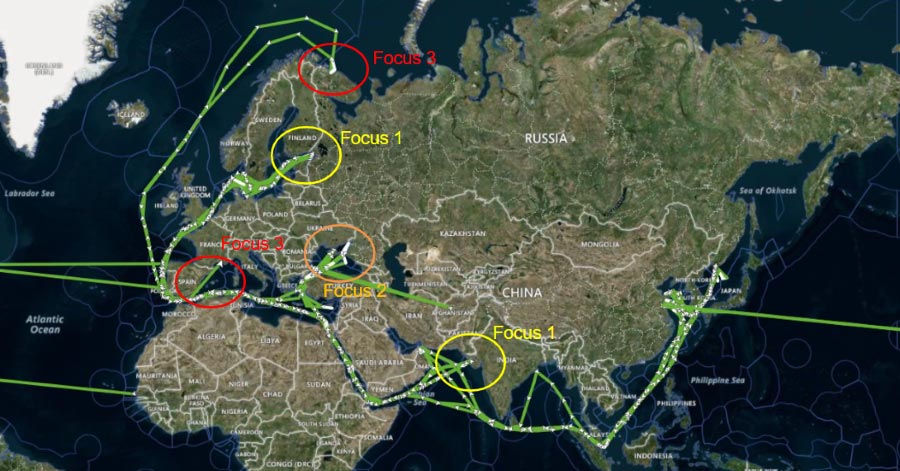
Voyage Analysis and Sanctions Risk Exposure
Historical voyage reconstruction revealed repeated activity involving Russian oil export terminals and trade corridors subject to international scrutiny.
While AIS data alone does not prove illicit conduct, combining:
- Sanctions databases
- Port call history
- Flag and ownership changes
- Inspection records
provides a structured sanctions risk assessment framework.
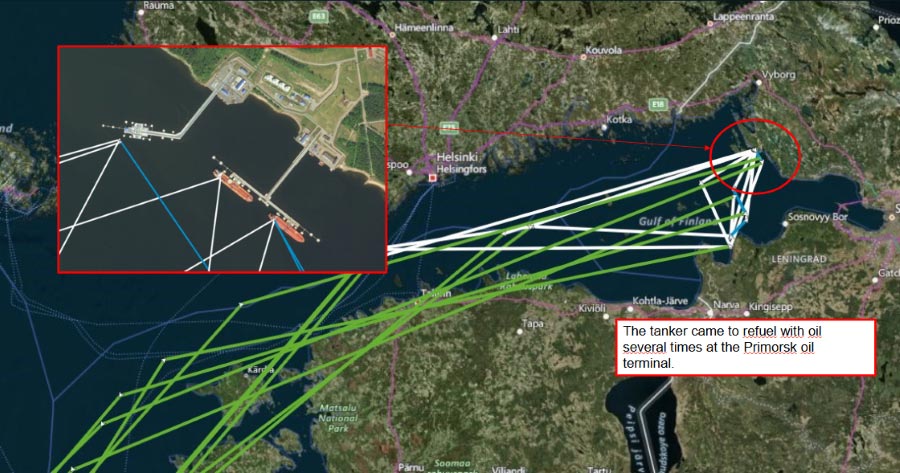
The vessel was ultimately intercepted by French authorities, underscoring the operational importance of persistent monitoring.
How MAS Enables Dark Fleet Vessel Tracking
MAS integrates AIS analytics, historical identity reconstruction and contextual maritime intelligence into a unified platform, AI powered for an automatic and continuous threat detection. In this case, MAS enabled analysts to:
- Track identity evolution over time
- Detect AIS inconsistencies
- Visualize voyage history across multiple geographies
- Correlate sanction exposure indicators
- Support structured maritime risk assessment
Effective dark fleet vessel tracking requires both data depth and accurate analytical capability, not just positional awareness.
Discover how MAS supports advanced dark fleet vessel tracking and maritime intelligence operations.
From Visibility to Maritime Security Intelligence
The “Grinch” case demonstrates that dark fleet vessel tracking is no longer limited to identifying where a vessel is located. It requires understanding how a vessel behaves over time.
As sanction evasion tactics grow more sophisticated, maritime security stakeholders must rely on behavioral analytics, data fusion and intelligence-driven monitoring to protect operations and ensure compliance.
In maritime security, visibility is not enough, detection, tracking and intelligence makes the difference.